Player Pathways from Initial Offers to Cashable Rewards in the UK's Controlled Gambling Market
Written by Gisela Friedrich · Sep 4, 2026
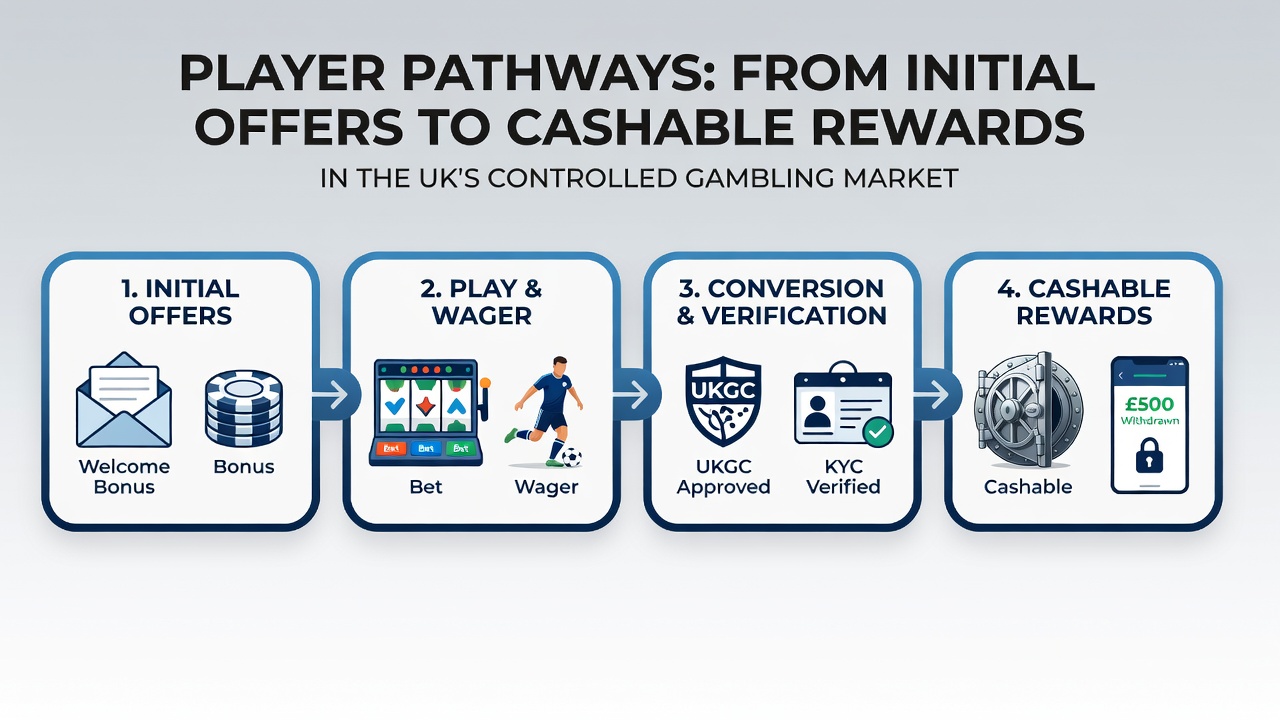
Player Pathways from Initial Offers to Cashable Rewards in the UK's Controlled Gambling Market
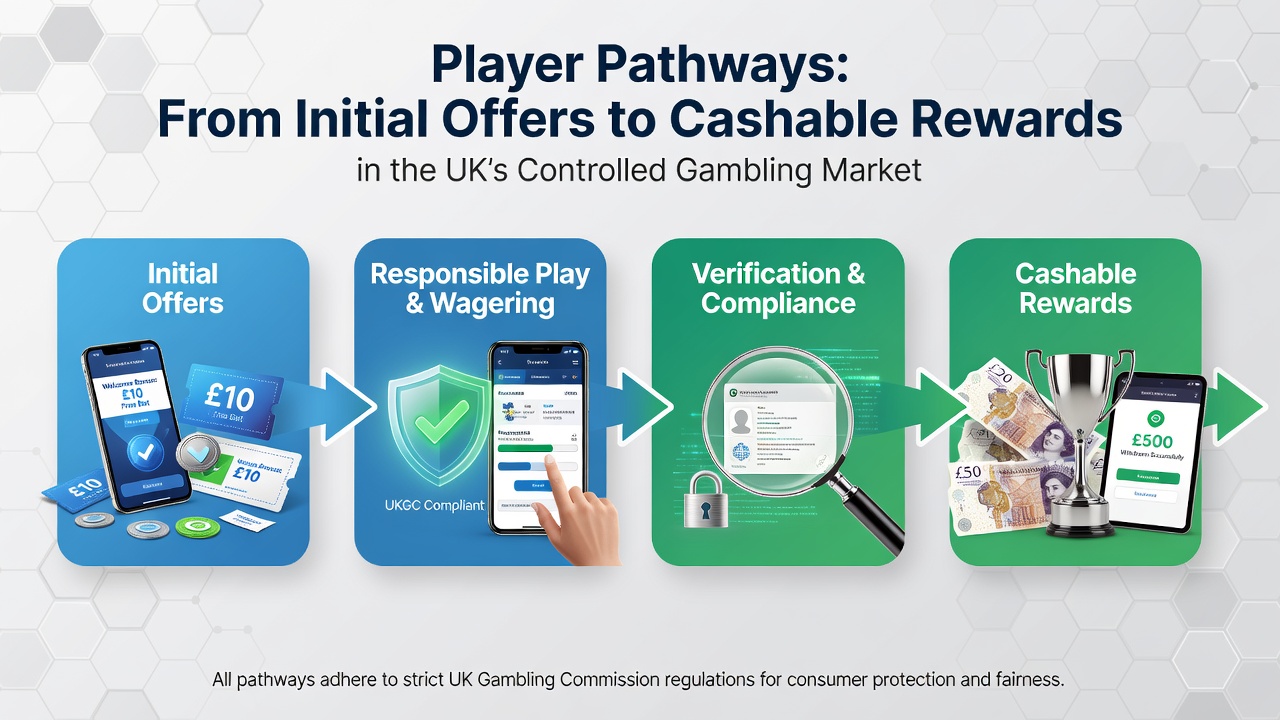
Operators in the UK's controlled gambling market structure player pathways so that initial offers transition through verification, wagering and compliance checks before any rewards become cashable, and data from multiple jurisdictions shows these sequences follow similar regulatory templates across Europe and beyond.
Initial Offers and Entry Points
Players encounter welcome bonuses, deposit matches and free spin packages as the first step in most pathways, with operators requiring account registration plus identity verification before those offers activate, while September 2026 marks the point where updated digital verification standards across several UK platforms align with broader EU data protection updates that streamline but also extend the onboarding timeline for new users.
Research indicates that operators present these offers through targeted promotions tied to specific payment methods or game categories, and those who study market patterns note that eligibility often hinges on geographic location plus age confirmation before any bonus credits appear in an account.
Verification and Compliance Stages
Once an offer is claimed the pathway moves into verification where documents undergo review to confirm identity and payment source, yet this phase can extend from hours to several days depending on the volume of checks required, and experts have observed that platforms integrate third-party services to cross-reference details against public records and financial databases.
During this interval players cannot access cashable portions of rewards even when wagering begins, which creates a holding pattern that regulators monitor to prevent premature withdrawals, and one study revealed that platforms using automated systems reduce average verification times by up to forty percent compared with manual processes.
Wagering Requirements and Progression
Wagering requirements dictate how much players must bet before any bonus converts to withdrawable funds, with multipliers typically ranging from twenty to fifty times the bonus amount according to figures released by industry monitoring groups, while the path includes tracking real-money bets separately from bonus bets in most systems.
Those who've examined operator terms across multiple sites discover that certain games contribute at different rates toward the total, slot spins often counting at one hundred percent whereas table games contribute far less or nothing at all, and this structure channels activity toward specific titles that operators promote heavily during the offer period.
What's interesting is how time-bound conditions interact with these multipliers, since many offers expire after thirty days even when wagering remains incomplete, which forces players to decide whether to continue or forfeit remaining bonus value, and reports from the Australian Institute of Criminology highlight similar expiry mechanics in other regulated markets that produce comparable player behavior patterns.
Conversion to Cashable Rewards
Once wagering thresholds are met the balance shifts from restricted bonus funds to cashable rewards that can be withdrawn through approved methods, yet operators apply additional checks at this stage including source-of-funds reviews that can pause the process again for high-value accounts, and data shows these final gates reduce the percentage of bonuses that ultimately convert to cash payouts.
Observers note that successful pathways often involve players who track their progress through account dashboards displaying real-time wagering meters, while those who encounter issues at conversion frequently cite mismatches between deposited amounts and verified payment sources as the main blocker.
Regulatory Framework and Market Data
UK operators operate under strict licensing conditions that require transparent disclosure of all offer terms before players engage, and external audits verify compliance with these rules on an ongoing basis, whereas comparisons with the Responsible Gambling Council of Canada reveal parallel approaches to player protection that emphasize clear communication of pathways from offer to cashout.
Industry reports indicate that conversion rates from initial offer to cashable reward hover around fifteen to twenty-five percent depending on the operator and game mix, with higher figures appearing on sites that simplify their wagering structures and lower ones on platforms with complex contribution tables, so the ball remains in the operator's court when designing pathways that balance player retention against regulatory obligations.
Conclusion
The pathway from initial offer to cashable reward in the UK's controlled gambling market follows a defined sequence of verification, wagering and compliance steps that operators must document clearly, and evidence from multiple regulatory environments demonstrates that transparent structures improve player understanding while maintaining market integrity across the sector.